Commercial Concrete Services
We deliver commercial concrete work in Little Rock, AR that meets tight schedules, handles heavy loads, and holds up to the demands of business operations year after year.
(501) 621-2844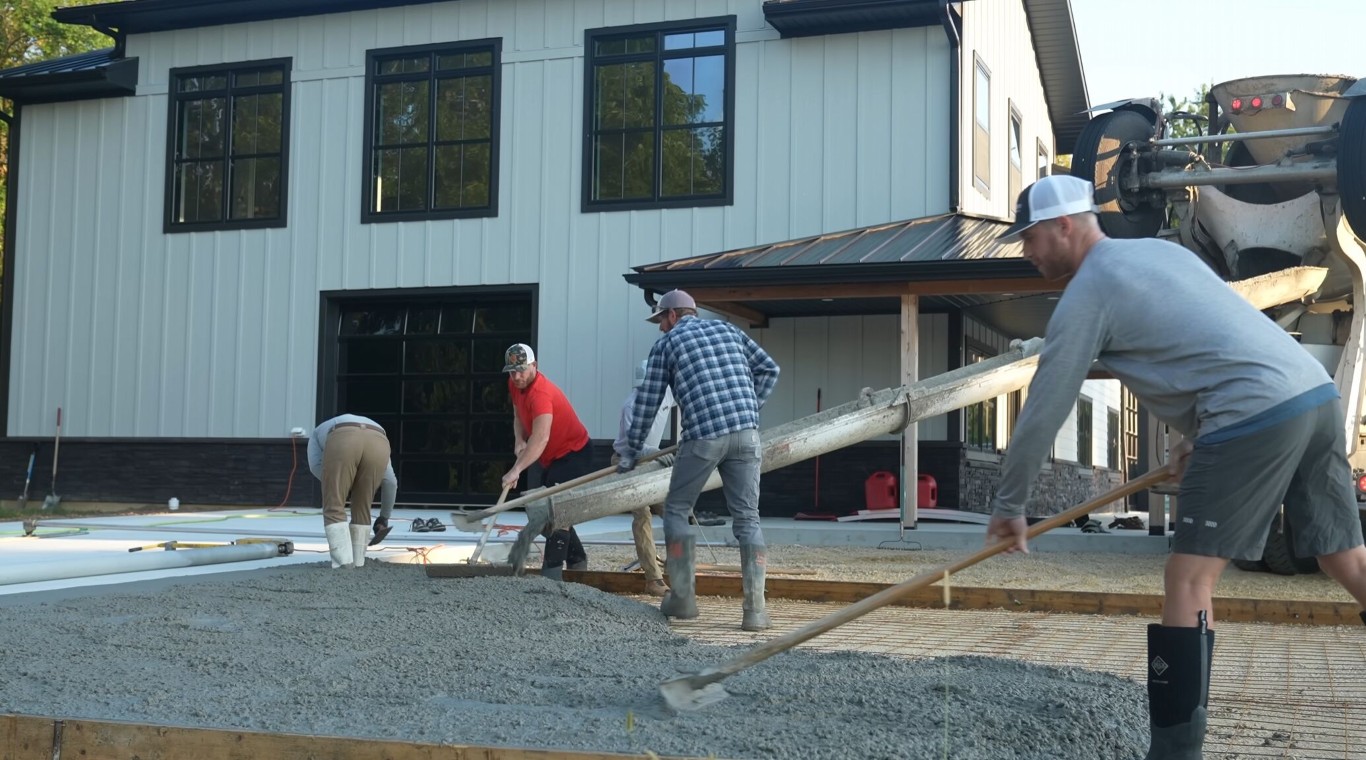
When your business, development, or commercial property needs concrete work done right, you need a contractor who understands more than just how to pour. At Advanced Little Rock Concrete Company, we work directly with property owners, general contractors, and project managers across Little Rock, AR to deliver commercial concrete on time, within budget, and built to last under real-world commercial conditions.
Commercial concrete is a different animal than residential work. The pours are bigger, the traffic loads are heavier, the specifications are tighter, and the consequences of delays or failures are more significant. We approach every commercial job with the planning, crew coordination, and quality control it deserves.
Commercial Concrete Work We Handle
We take on a wide range of commercial concrete projects. Here is a breakdown of the work we do most often for business and commercial clients in the Little Rock area.
- Parking lots and parking aprons: High-traffic surface pours with proper thickness, reinforcement, and drainage planning for vehicle loads.
- Commercial slabs and floor systems: Warehouse floors, retail floors, loading dock areas, and building pads poured flat and finished to specification.
- Sidewalks and ADA-compliant walkways: Pedestrian surfaces built to local code, including curb cuts, ramps, and detectable warning surfaces.
- Dumpster pads and utility pads: Thick reinforced pads designed for heavy point loads from trash trucks, HVAC equipment, and mechanical systems.
- Curbs and gutters: Site drainage infrastructure including poured concrete curbs, gutters, and channel drains.
- Retaining structures: Commercial-grade concrete retaining walls for grading, slope control, and site development needs.
- Concrete flatwork for developments: Coordinated flatwork across multi-building sites, phased to fit the overall construction schedule.
If your project does not fit neatly into one of those categories, call us. We have worked on enough varied commercial sites to assess almost any concrete scope quickly and accurately.
Why Commercial Concrete Needs a Qualified Crew
Commercial concrete projects fail most often because the contractor treating it like a big residential job. The two are not the same, and the difference shows up fast once the project is under load.
Load Requirements Are Different
A residential driveway carries passenger vehicles. A commercial parking lot carries delivery trucks, forklifts, and heavy equipment. These applications require heavier concrete mixes, thicker slabs, closer rebar spacing, and more rigorous base preparation. Using residential specs on a commercial surface is a recipe for early failure and expensive repairs.
Scheduling Coordination Matters
On a commercial job site, your concrete work is often on the critical path of the entire project. A delay in the slab can push back framing, utilities, and occupancy. We show up when we say we will, and we communicate clearly when anything changes. If you are working with a general contractor, we coordinate directly with them to keep the schedule tight.
Spec Compliance and Documentation
Commercial projects often require mix design documentation, compressive strength testing, and pour logs. We are set up to provide the documentation your project requires. If you need certified materials or third-party testing coordination, let us know during the estimate phase and we will build that into the plan. For large concrete slab foundations, you may also want to look at our concrete slab and foundation work to understand how we approach structural pours.
How We Keep Your Project on Time and on Budget
Nobody wants surprises on a commercial job. Here is how we manage commercial projects to minimize delays and cost overruns.
Detailed Pre-Pour Planning
Before a truck rolls, we have mapped out the pour sequence, confirmed the mix design, arranged the crew size needed for the square footage, and communicated the curing and protection plan to everyone involved. Large pours need to happen in sections with clear construction joints so each section is placed and finished correctly before the next begins.
Transparent, Written Quotes
We provide line-item estimates that break down material, labor, and any subcontractor costs separately. If your project scope changes, we issue a written change order before doing the extra work. No one should ever get a surprise invoice on a commercial project, and our clients do not.
Communication Throughout
You will have a direct contact at our company for the entire duration of your project. We update you when milestones are hit and flag any issues as soon as they arise. If you need concrete flatwork alongside your commercial slab, we also offer sidewalk and flatwork installation as part of a combined commercial scope.
Common Questions About Commercial Concrete
Here are the questions we hear most from commercial clients and project managers.
Do you work directly with general contractors?
Yes. A significant portion of our commercial work comes through general contractors and construction managers who need a reliable concrete subcontractor. We are accustomed to working within a larger project schedule, coordinating with other trades, and providing the documentation GCs need for their project records. If you are a GC looking for a concrete sub in the Little Rock area, we are happy to discuss your project and provide a competitive bid.
How thick should a commercial parking lot be?
For light commercial use, such as standard passenger vehicles and occasional light delivery trucks, a 5-inch thick slab with rebar on an 18-inch grid is a common minimum. For heavier applications, such as truck traffic, loading areas, or surfaces that will see regular heavy vehicle use, we typically recommend 6 to 8 inches with closer rebar spacing and a higher-strength concrete mix. The right spec depends on the specific load conditions, soil type, and how the surface will be used day-to-day. We assess all of this during the site visit.
How long before we can open a commercial parking lot to traffic?
Standard concrete reaches roughly 70 percent of its design strength in about 7 days under normal curing conditions, which is when most light commercial surfaces can be opened to passenger vehicles. Full design strength is typically reached at 28 days. For heavy truck traffic or high-load applications, we recommend waiting the full 28 days before opening to those loads. The exact timeline depends on the mix design, ambient temperature during curing, and whether curing compounds were applied. We will give you a specific recommendation based on your pour.
Have a Commercial Concrete Project? Call Us Today.
We work with property owners, general contractors, and developers throughout Little Rock and Central Arkansas. Call us to discuss your scope and we will get you a detailed estimate fast.
(501) 621-2844