Concrete Leveling
If you have a sunken or uneven concrete slab on your property in Little Rock, AR, leveling it is usually faster, cleaner, and far less expensive than ripping it out and starting over.
(501) 621-2844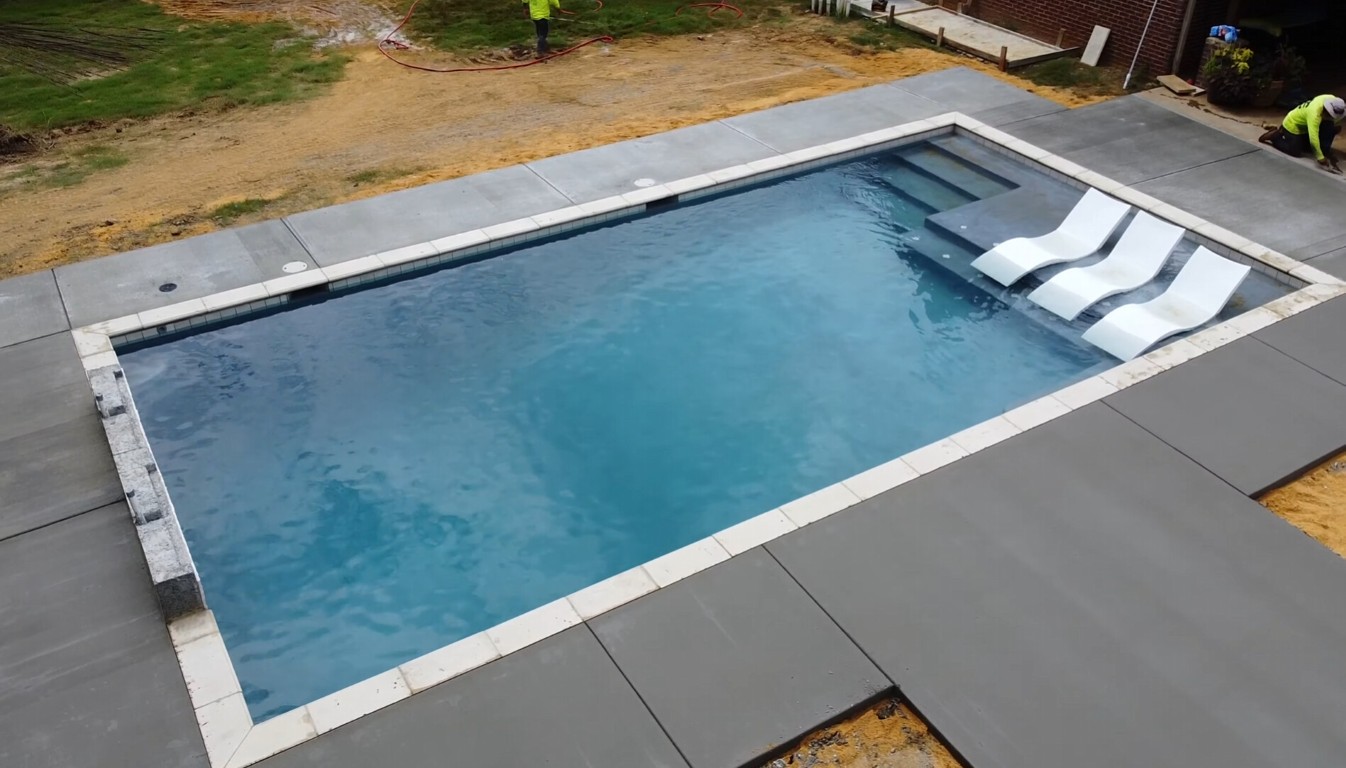
Sunken concrete is one of the most common issues we deal with at Advanced Little Rock Concrete Company. A slab sinks when the soil underneath it settles, washes out, or compresses over time. It does not mean your concrete is ruined. In most cases, the slab itself is still in solid shape and just needs to be lifted back into position.
Uneven concrete is more than an eyesore. A raised edge at a sidewalk joint or a driveway that slopes toward your garage door can funnel water in the wrong direction, create a trip hazard, or speed up cracking. Leveling it out solves all of those problems at once, usually in a single visit, and without the mess and disruption of a full demo and repour.
Why Does Concrete Sink in the First Place?
Understanding what caused your slab to sink helps make sure the fix actually holds. Here are the most common causes we see on properties in Little Rock and the surrounding area.
- Soil erosion under the slab: Water moving under or around the slab carries fine soil particles away over time, leaving gaps that let the concrete drop.
- Poor compaction during original installation: If the base was not properly compacted when the slab was first poured, the soil will keep settling for years afterward.
- Tree roots pulling back: Root systems that grew under a slab can leave large voids behind when the tree dies or roots decay.
- Plumbing leaks under the slab: A slow leak in an underground pipe can wash out soil over months or years without you realizing it.
- Heavy rainfall and Arkansas clay soil: Clay soils expand when wet and shrink when dry, which creates movement cycles that gradually shift slabs out of position.
- Freeze-thaw cycles: Winter temperatures in Arkansas can push water into the soil under a slab, freeze it, and shift the concrete upward or sideways before it thaws and settles.
When we come out for an assessment, we try to identify the root cause rather than just the symptom. Lifting a slab without addressing the underlying issue means you will be dealing with the same problem again in a few years.
Leveling vs. Full Replacement: What Makes Sense for You
Leveling is not right for every situation, and we will tell you honestly which approach fits your slab. Here is how we think about it.
Good Candidates for Leveling
Slabs that are structurally sound but have settled or tilted are the best candidates for leveling. The concrete itself is still strong and the only issue is that it has moved out of its original position. Driveways, sidewalks, patio sections, garage floors, and pool deck panels all respond well to leveling when the slab is intact. If you are also considering work on your concrete patio, leveling any settled sections before resurfacing gives you a much better final result.
When Replacement Makes More Sense
If the slab is cracked into multiple shifting pieces, heavily spalled, or significantly thinner than it should be due to years of surface wear, leveling is not going to give you a lasting fix. At that point, a full tear-out and repour is the more honest recommendation. We will show you what we are seeing and walk you through the options so you can decide with real information in hand, not a sales pitch. For slabs that need removal and replacement, our concrete repair and replacement service covers the full scope of that work.
What to Expect When We Level Your Concrete
Here is how the process works from first call to finished job. Most leveling projects are completed in a single visit with minimal disruption to your property.
Step 1: Assessment and Quote
We come to your property, walk the affected slab, and identify how far it has sunk and what likely caused the movement. You get a written quote with a clear scope of work before any decision is made.
Step 2: Drilling and Lifting
Small holes are drilled through the slab at strategic points. Material is pumped beneath the concrete to fill voids and apply upward pressure that lifts the slab back to its correct elevation. We raise the slab gradually and check alignment as we go.
Step 3: Sealing and Cleanup
Once the slab is level, the drill holes are patched and finished to blend with the surrounding surface. Any gaps at control joints or slab edges are sealed to reduce future water infiltration. The area is cleaned up before we leave, and the surface is typically ready to use the same day.
Concrete Leveling Questions We Hear a Lot
Here are the things people most often ask us before booking a leveling job.
How long does concrete leveling last?
A well-executed leveling job on a solid slab can last ten to twenty years or longer, especially when the underlying cause of the settling is addressed at the same time. The key is making sure voids are fully filled and the slab has proper support across its entire footprint. We also seal joints after lifting to reduce the chance of water getting back underneath. That said, no concrete work comes with a permanent guarantee since soils shift and conditions change, but a quality leveling job gives you many years of stable, safe surface.
Can you level a driveway that has sunk near the garage door?
Yes, and this is one of the most common leveling jobs we do. When a driveway section near the garage door sinks, it can direct water into the garage and create a bump or lip that scrapes vehicle bumpers. We lift the slab back to its original slope so water flows away from the structure and the surface meets the garage floor cleanly. In some cases the settlement is accompanied by cracking along the slab joint, which we seal after lifting to prevent future water infiltration.
Is concrete leveling noisy or disruptive?
The drilling process creates some noise, similar to a standard power drill, but it is not as loud or disruptive as a full demolition job. Most residential leveling work wraps up in a few hours. We keep the work area tidy throughout the process and clean up fully before we leave. There is no heavy equipment on your lawn, no concrete truck in the street, and no curing period that locks you out of your driveway for days. Most surfaces are ready to walk or drive on the same day.
Got a Sunken Slab? Let Us Take a Look.
We serve Little Rock and the surrounding area and offer free, no-obligation assessments for concrete leveling projects. Call us and we will tell you straight whether leveling makes sense for your slab.
(501) 621-2844