
Loading...
Serving Little Rock, AR and surrounding areas. (501) 621-2844
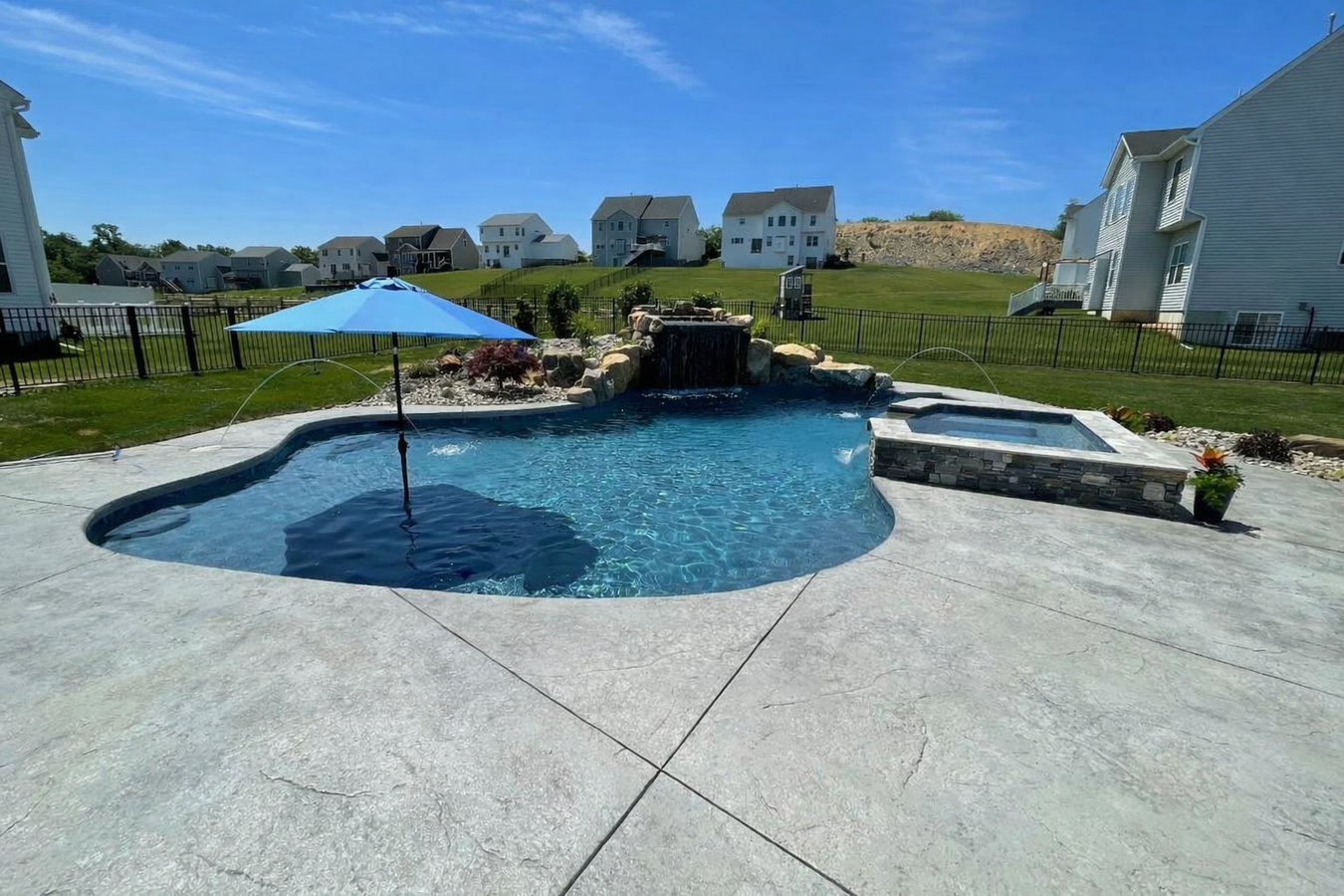
Advanced Little Rock Concrete Company serves Hot Springs homeowners with pool deck construction, driveway building, and patio pours on the hilly, wooded lots that define Garland County. We understand how sloped terrain, heavy rainfall, and older housing stock shape every concrete job here, and we respond to every inquiry within one business day.
Hot Springs has one of the highest concentrations of pool properties in central Arkansas, driven by the lake culture around Lake Hamilton and the long, hot summers that make outdoor water features practical for most of the year. A properly poured concrete pool deck handles the constant moisture, the bare feet, and the heat expansion that a waterfront or hillside property in Hot Springs demands - far better than wood decking or loose pavers on a sloped lot.
Hot Springs is built into the Ouachita Mountains, and a large share of residential lots slope steeply enough that erosion and soil movement are ongoing problems. Concrete retaining walls hold the grade on hillside properties, protect foundations from runoff, and create level usable space out of yards that would otherwise be too steep to use - essential work on the kinds of lots common throughout Garland County.
Many Hot Springs driveways climb steep grades to reach homes set back from the street or up on a hillside. Building a driveway on a slope requires careful drainage design so water does not sheet down the surface and erode the edges over time. We build driveways here with the grade and the Garland County rainfall in mind, not just the minimum thickness that passes inspection.
Vacation homes and lake properties near Lake Hamilton and Lake Catherine see heavy outdoor use during the long Arkansas summer, and a concrete patio built for that kind of traffic holds up where wood decking warps and rots in the humidity. For primary residences in Hot Springs neighborhoods, a solid patio on a properly prepared base stays level through the clay soil movement that affects most Garland County lots.
Hot Springs has a significant share of older homes that sit on foundations built before modern base preparation standards were common. If you are adding a structure on your property or pouring a new slab for an addition, getting the base depth and compaction right for Ouachita Mountain terrain is not optional - the sloped lots and heavy rainfall here punish any foundation that was cut short on preparation.
Many homes in Hot Springs sit on elevated lots where exterior steps are the only way from the driveway to the front door. Older homes near Bathhouse Row and downtown have original entry steps that have been absorbing freeze-thaw cycles for decades and are now crumbling or settling unevenly. Replacing them with properly formed concrete steps improves safety and holds up to both the elevation change and the weather far better than patching deteriorated work.
Hot Springs sits inside the Ouachita Mountains, and that geography drives nearly every concrete challenge in the city. Most residential lots are sloped, many steeply, and the terrain means water runs off quickly after rain - which Hot Springs gets a lot of, averaging over 54 inches annually according to the National Weather Service Little Rock office. That runoff collects against foundations, erodes unprotected slopes, and puts constant pressure on any concrete surface at the low end of a grade. A flat suburban lot and a Hot Springs hillside lot need completely different drainage designs, base depths, and slope planning - and a contractor who does not account for that difference is setting the work up to fail.
The age of Hot Springs housing stock adds another layer. A significant share of homes in the city were built before 1970, with many dating to the 1920s through 1940s - some of the oldest residential concrete work in central Arkansas. Original foundations, driveways, and walkways from that era were poured under standards far below what we use today: thinner slabs, minimal base preparation, no reinforcement in many cases. Freeze-thaw cycles from December through February have been working on those slabs for 60 to 80 years. When that concrete finally gives out, replacement is usually the only cost-effective path forward, and the replacement needs to be done with the conditions here in mind - not as a copy of a straightforward flat-lot job in a newer suburb.
Our crew works throughout Hot Springs regularly, and we understand the local conditions that affect concrete work here. Permits for foundation work, retaining walls, and larger residential projects go through the City of Hot Springs, and we are familiar with how that process runs so we can tell you upfront what your project will require before we schedule anything. The mix of historic neighborhoods, lake properties, and newer builds on the city's edges means we see a wide range of lot types and concrete conditions on every trip into Garland County.
Hot Springs is a city of distinct neighborhoods. The streets closest to downtown and Hot Springs National Park have older Craftsman bungalows and Victorian-era homes where original concrete from the 1930s and 1940s is still in place - and well past its service life. The waterfront properties along Lake Hamilton to the south are built on sloped lots right at the water, where moisture exposure is constant and drainage matters more than almost anywhere else we work. Newer neighborhoods on the northern and eastern edges of the city have more conventional lots, but the Ouachita Mountain clay soil is consistent throughout all of them.
We serve Hot Springs as part of a broader central and south-central Arkansas territory. Homeowners in Benton to the northeast are within our service area, and we regularly work the corridor between Benton and Hot Springs on the same trip. Homeowners in Russellville to the northwest are also part of the territory we cover regularly.
Call or fill out the contact form and we will get back to you within one business day. Let us know what you need and roughly where your property is in Hot Springs - whether it is a hillside lot near downtown, a lake property, or a neighborhood further from the water - and we will confirm availability for a site visit.
We come to the property, look at the slope, the soil, and the drainage situation, measure the area, and talk through the options. The estimate is free and written - it covers materials, base preparation, drainage design, and labor. On Hot Springs lots, we always look at drainage first because it shapes everything else. You can compare our quote accurately against any others you receive.
We handle site preparation, forming, the pour, and finishing. On sloped Hot Springs lots, the prep work before the pour - grading, drainage routing, base compaction - takes more time and attention than on a flat suburban lot. That is the work most people do not see, but it is what determines whether the concrete holds up through the next ten years of Garland County rain events.
We clean up the site the same day and walk you through the curing timeline - when foot traffic is fine, when vehicle weight is safe, and what to watch for during the first few weeks. You do not need to be present the whole time, but we check in with you before we leave and follow up if you have questions after the fact.
We serve Hot Springs and all of Garland County. Free estimates, written quotes, no pressure. Call or fill out the form and we will be in touch within one business day.
(501) 621-2844Hot Springs is a city of roughly 37,000 in Garland County, situated inside the Ouachita Mountains about an hour southwest of Little Rock. It is one of the most distinctive cities in Arkansas - home to Hot Springs National Park, the only national park located entirely within a U.S. city, and the famous Bathhouse Row along Central Avenue that has drawn visitors since the early 1900s. The housing stock reflects that history: the neighborhoods closest to downtown include Craftsman bungalows and Victorian-era homes from the 1920s and 1930s, many still occupied by long-term residents. The areas around Lake Hamilton to the south and Lake Catherine to the west hold a mix of primary residences and vacation properties, many built right at the water on sloped lots. Oaklawn Racing Casino Resort on Central Avenue has been a local institution since 1904 and anchors the city's identity as much as the national park does.
The city has a high share of rental and vacation properties - roughly 40 to 45 percent of occupied units are rentals, according to Census data - which means there is a steady mix of owner-occupants who invest in their homes and short-term rental operators who need reliable contractors to keep properties in good shape between guests. The terrain is what defines the work here more than anything else. Wooded hillside lots, steep grades, and the constant moisture from over 54 inches of annual rainfall mean that concrete work in Hot Springs requires more drainage planning and site preparation than in most parts of central Arkansas. Homeowners in Benton to the northeast share similar Ouachita-foothills clay soil conditions, and we serve that area as well.
Get a durable, professionally finished concrete driveway built to last.
Learn MoreSafe, code-compliant concrete sidewalks installed for any property.
Learn MoreSolid concrete retaining walls that control erosion and add structure.
Learn MoreLevel, long-lasting concrete floors for residential and commercial spaces.
Learn MoreDurable concrete parking lots built for high-traffic commercial use.
Learn MoreCall today for a free estimate. We know the hilly lots, the rain, and the older housing stock - and we work throughout Hot Springs and Garland County.