
Loading...
Serving Little Rock, AR and surrounding areas. (501) 621-2844
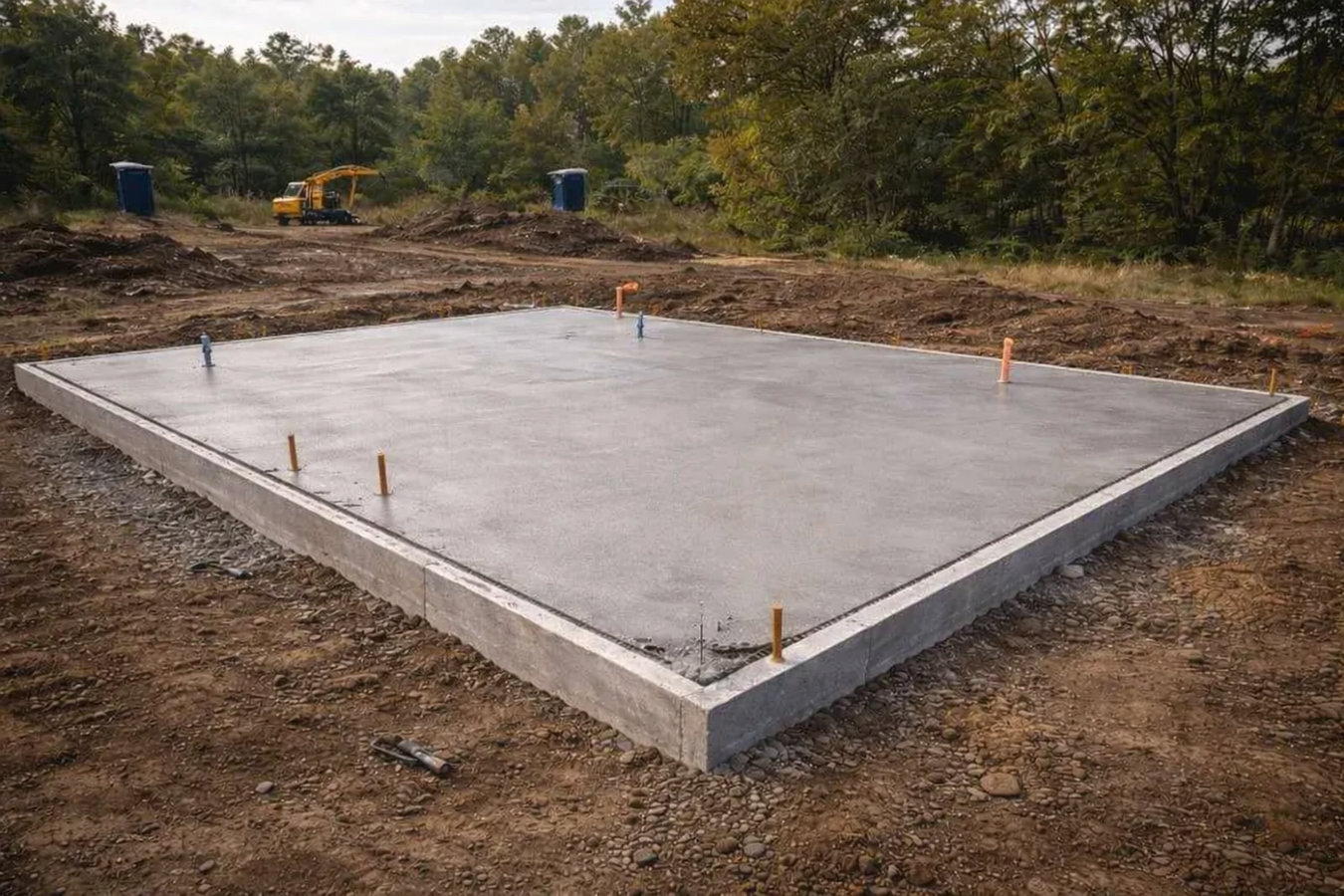
Clay soil, summer heat, and heavy spring rains all work against a poorly built slab. We prepare Little Rock foundations right the first time - proper compaction, vapor barriers, steel reinforcement, and permits handled for you.
Slab foundation building in Little Rock means pouring a single flat concrete pad directly on prepared ground - soil compacted, gravel laid, vapor barrier installed, steel placed - and most standard residential slabs take three to five days of active work before the curing period begins.
A slab foundation is the most common foundation type for new homes in central Arkansas. Your house sits directly on the concrete - no crawl space, no basement - so the slab serves as both the floor and the structural base. That means the preparation underneath matters as much as the pour itself. In Little Rock, where clay soil expands and contracts with every wet and dry cycle, skipping proper compaction or drainage prep sets up the slab for cracking within a few years. If you are also planning vertical structure around the slab perimeter, our concrete footings service handles the thickened edges that carry your wall and roof loads.
Advanced Little Rock Concrete Company builds slab foundations throughout Little Rock and the surrounding metro. We handle the permit application, coordinate the city inspection, and walk you through every stage of the work so there are no surprises from first shovel to framing-ready slab.
Small hairline cracks are normal over time, but cracks you can fit a quarter into - or cracks that are getting wider season by season - are a sign the foundation is moving more than it should. In Little Rock, this kind of movement is often tied to the clay soil expanding and contracting with the seasons, and it is worth having a concrete contractor take a look before the problem gets worse.
When a slab foundation shifts, the walls and door frames above it shift too. If doors that used to swing freely now stick or will not latch, or if you notice gaps forming at the corners of window frames, the foundation underneath may be moving. This is a common early warning sign in Little Rock neighborhoods where clay soil movement is ongoing through wet and dry seasons.
If you have tile, hardwood, or laminate flooring that feels damp, or if you see moisture stains appearing on a concrete floor, the vapor barrier under the slab may have failed or was never properly installed. Little Rock's high humidity and relatively shallow groundwater in some areas make this more common here than in drier climates - and it is a problem that gets worse over time if ignored.
If you are building a new home, garage, or room addition anywhere in the Little Rock area, a slab foundation is the standard starting point for most new construction on relatively flat lots. Even a modest addition - a sunroom, a detached garage, a workshop - typically needs its own properly prepared concrete slab poured to code before framing can begin.
We pour slab foundations for new homes, garages, room additions, workshops, and any other structure that needs a solid concrete base. Every slab we build starts with thorough site preparation - soil compacted in lifts, gravel drainage layer in place, polyethylene vapor barrier laid before the steel goes in. The thickened edges and footing sections that carry your wall loads are formed and poured as part of the same monolithic pour in most residential applications. For projects where the structure above requires separate deep footings, our foundation installation service covers the full scope of foundation work including crawl space and replacement foundations.
We handle the City of Little Rock building permit application and coordinate the footing inspection that takes place before the concrete is poured - so you do not have to navigate the permit office yourself. After the pour, we keep the slab properly cured through Little Rock's weather conditions, whether that means wetting the surface in summer heat or protecting it from a cold snap in winter. We also provide a final walkthrough and keep a copy of your permit records so you have documentation when you sell the home or pull it for any follow-on work.
Suits builders and homeowners starting new construction on a vacant lot or prepared site in the Little Rock metro.
Ideal for detached garages, sunrooms, workshops, or any structure added to an existing property that needs its own concrete base.
Best for properties where the existing slab has failed and needs to be removed, properly prepared, and repoured to current standards.
Little Rock sits on expansive clay soil that is one of the most demanding conditions a concrete slab can face. That clay absorbs water and swells during wet winters and spring rains, then shrinks and pulls away during the hot, dry summers - a cycle that puts constant pressure on any slab from below. Contractors who work primarily in other regions sometimes underestimate this, skimping on the compaction and drainage prep that makes the difference between a foundation that lasts 40 years and one that starts cracking in five. The University of Arkansas Cooperative Extension Service has published guidance on Arkansas clay soil behavior that informs how we approach every site preparation here. Summer heat is another local factor: Little Rock regularly sees temperatures above 95 degrees Fahrenheit, and freshly poured concrete that dries too fast on the surface can crack before it has a chance to cure properly. We schedule pours for early morning in summer and use appropriate admixtures and curing methods to protect the slab regardless of what the weather does.
We build slab foundations across the full Little Rock metro, including Benton and Conway, where the same clay soil conditions apply and where the City of Little Rock permit process has equivalents at the local level that we navigate on your behalf. Little Rock also receives an average of about 50 inches of rain per year, making site drainage planning a real part of every foundation project - not an afterthought. The EPA Moisture Control guidance reinforces why vapor barriers and proper grading are non-negotiable under a slab in a high-humidity climate like ours.
We visit your property, assess the soil and drainage conditions, and give you a written quote. In Little Rock, this on-site look is essential - the soil and grade of your specific lot directly shape what prep work is needed and what the project will cost. You will hear back from us within one business day of your initial call.
Once you approve the estimate, we apply for the City of Little Rock building permit before any digging starts. Permit approval typically takes a few business days. We handle this for you - you do not need to visit the permit office or track the application yourself.
With the permit approved, the crew prepares the site: soil compacted in lifts, gravel drainage layer installed, vapor barrier laid, and steel reinforcing bars placed inside the forms. In Little Rock, this stage often takes a full day or more because the clay soil requires careful, thorough compaction.
The city inspector visits to confirm the prep work before the concrete is poured. The pour itself typically takes four to eight hours for a standard home slab. After the pour, we manage the curing period - keeping the surface moist in summer heat or protected from cold in winter. Framing can typically begin within a week, and you get full documentation of the completed permit and inspection.
We visit your site, explain exactly what your lot needs, and give you a written estimate before any work begins - no obligation.
(501) 621-2844We spend the time before every pour on the step most shortcuts skip: thorough soil compaction and drainage preparation matched to Little Rock's specific clay conditions. That prep is what separates a slab that stays level for decades from one that starts shifting within a few years.
We apply for the City of Little Rock building permit, coordinate the footing inspection before the pour, and give you a clean copy of your permit records when the job is done. You should not have to chase a permit yourself or wonder whether your foundation was ever inspected.
Little Rock summers regularly exceed 95 degrees Fahrenheit, and we schedule and manage pours with that heat in mind - early morning starts, proper admixtures, and active curing protection. Winter pours are handled the same way. The concrete cures correctly regardless of the season.
Every project starts with a written, itemized estimate. If something unexpected comes up during excavation - old utility lines, unstable soil pockets, drainage issues - we stop and talk to you before we proceed. You approve any change before it happens, not after.
Every slab we pour in Little Rock is built with the soil conditions, permit requirements, and weather realities of central Arkansas in mind. That local focus is what gives homeowners and builders confidence that the foundation we build will still be performing correctly decades from now.
Full foundation installation for new homes and additions, covering slab, crawl space, and replacement foundations across the Little Rock metro.
Learn MoreConcrete footings poured to the correct depth and width for your structure - the base that everything above ground depends on.
Learn MoreSpring and fall booking windows fill quickly - contact us now to lock in your project date and get a written estimate before the season gets away from you.