
Loading...
Serving Little Rock, AR and surrounding areas. (501) 621-2844
A cracked or lifted walkway is a trip hazard waiting to happen. We build concrete sidewalks that hold up through Arkansas clay soil movement, heavy rain, and freeze-thaw winters.
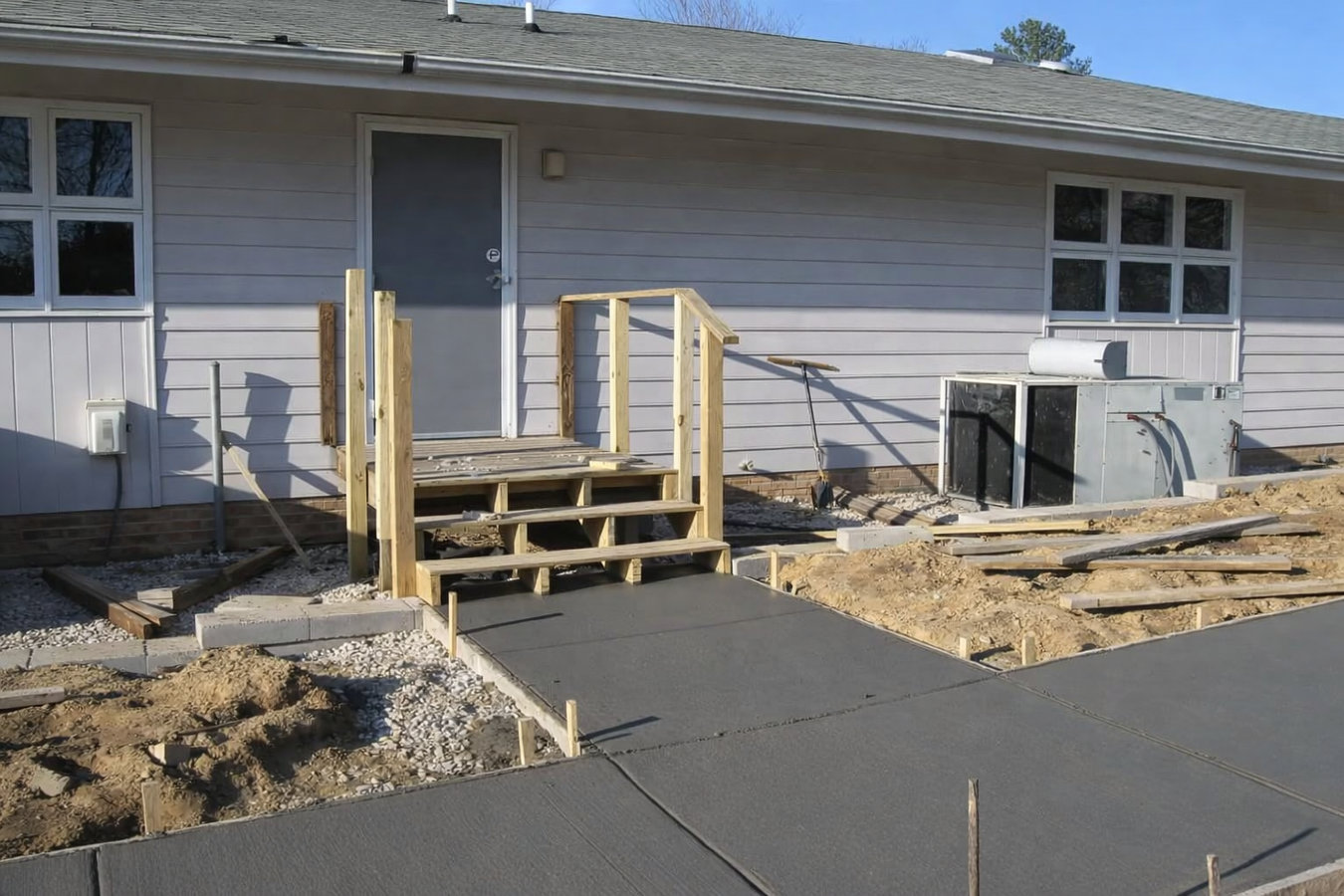
Concrete sidewalk building in Little Rock involves excavating the ground, compacting a stable base to handle the area's clay soil, pouring and finishing a four-inch slab, and cutting control joints so the concrete cracks in controlled lines rather than randomly across the surface, with most residential walkway jobs completed in one to two days.
A lot of Little Rock homeowners call us after noticing a raised section where one slab has pushed up higher than the next, or after a crack grows wide enough to catch a shoe heel. In older neighborhoods - Hillcrest, the Heights, Pulaski Heights - tree roots are often the culprit. In newer areas, it is usually a base that was not prepared for the clay soil movement this region sees every year. Either way, the fix is the same: proper base prep before the pour. If you are also thinking about updating your concrete driveway at the same time, we can often coordinate both projects and keep your yard disruption to a single visit.
Building a sidewalk that stays flat and safe for decades is less about the concrete mix and more about what happens underneath it before the pour. We do not skip that step.
If you feel a bump or step between two sections when you walk across, the ground underneath has shifted. In Little Rock, clay soil expanding and contracting through wet and dry seasons causes this, and once a slab has moved significantly, patching rarely holds for long.
Small hairline cracks are normal in older concrete, but when cracks grow wide enough to catch a coin on edge, water is getting in. In Little Rock freeze-thaw winters, that water expands when it freezes and widens the crack every season - waiting usually means a bigger repair bill later.
If you live in one of Little Rock's older neighborhoods with large oaks or maples near your walkway, sections pushed up unevenly by roots underneath are both a safety hazard and a recurring maintenance problem. A raised edge is one of the most common causes of trip-and-fall injuries on residential property.
When the top layer starts flaking off in chips or edges crumble when you press on them, the slab has reached the end of its useful life. This kind of deterioration is difficult to repair cosmetically and usually means the concrete underneath has weakened enough that full replacement is the more cost-effective path.
We build residential sidewalks from the street to the front door, connecting paths between structures, side-yard walkways, and garden paths - anywhere you need a safe, durable surface for foot traffic. Every job includes excavation, base compaction, forming, pouring, finishing, and control joint cutting. We handle the permit process in situations where the city requires one, which is common when the walkway runs along the street or in the right-of-way. For homeowners who want something beyond a plain gray finish, we can also coordinate stamped or decorative concrete finishes that match the style of a new concrete driveway or patio.
Our standard sidewalk is four inches thick, which is the right depth for foot traffic on a properly prepared base. If you expect heavier use - a riding mower crossing it regularly, for example - we can go thicker. All sidewalks get a broom finish for slip resistance and are sloped a quarter inch per foot to drain water off the surface and away from your home. The American Concrete Institute recommends this drainage slope as a baseline standard, and we build it into every sidewalk we pour.
Best for homeowners replacing a cracked or uneven path from the driveway or street to the front door.
Good fit for connecting a gate, garage, or outbuilding to the main structure with a clean, permanent surface.
Suited for projects near the curb or in the city right-of-way where a permit is required and city standards apply.
Works well for walkways through a yard or garden where a stable, easy-to-maintain surface is needed.
Little Rock's clay-heavy soil is the most important local factor in any concrete sidewalk project. That soil swells when it absorbs water and shrinks when it dries - a cycle that repeats every time it rains and every time a dry spell sets in. A sidewalk poured over uncompacted or poorly prepared ground will start shifting within a few years regardless of the quality of the concrete. In older neighborhoods like Hillcrest, the Heights, and Pulaski Heights, mature tree roots add another layer of complication - roots grow toward moisture, and a concrete slab sitting over moist soil is exactly what they are looking for. We assess root intrusion before pouring and talk through options like routing the walkway around major roots or installing a root barrier where it makes sense. We serve homeowners throughout the metro, including Sherwood and North Little Rock, where the same clay soil conditions and older tree canopies are part of nearly every sidewalk job.
The city permit process is another thing to plan for. Little Rock requires permits for most new sidewalk work near the street, and we handle that paperwork before work begins - not after. Unpermitted sidewalk work can create complications when you go to sell your home or make an insurance claim, so we do not cut that corner. Spring and fall are the best times to pour in this climate, and those seasons book up fast. Reaching out a few weeks earlier than you think you need to gives you more scheduling flexibility and often better pricing before the rush.
We respond within one business day. We ask a few questions - how long and wide, whether you are replacing existing concrete or starting fresh, and whether there are obstacles like tree roots or slopes - then schedule an on-site visit to measure and give you a written estimate.
If your project requires a city permit - common for sidewalks near the street - we handle the application before work begins. Once the permit is in hand, you get a confirmed start date. This step usually adds a few days to the timeline but protects you legally.
The crew marks out the area, removes old concrete or vegetation, and excavates to the right depth. In Little Rock, this includes extra compaction work for the clay soil. After forming, they pour, spread, and finish the surface - adding texture for slip resistance and cutting control joints.
Once the pour is done, the crew cleans up and removes forms the next day. Foot traffic is safe after 24 to 48 hours - keep vehicles off for at least a week. After the concrete reaches full strength over about 28 days, walk it yourself and let us know if anything does not look right.
We respond within one business day and give you a written estimate before any work starts. No pressure - just honest answers about what your project needs.
(501) 621-2844We compact the ground and add a gravel layer before every pour. This is the step most failed sidewalks skipped, and it is the main reason ours hold up in Little Rock conditions.
We pull required city permits before the crew arrives. Permitted sidewalk work is on record and protects you at resale - we do not suggest skipping this step to save a few days.
You hear back from us within a business day. The estimate we give you is in writing and covers materials, labor, permit fees, and cleanup - no surprise costs at the end of the job.
In Little Rock's older neighborhoods, we check for root intrusion before pouring and talk through options. Smart planning at the start slows the problem from recurring - a detail contractors who have not worked in this area often overlook.
A sidewalk that stays flat and safe for decades is the outcome every homeowner wants and the standard we hold every job to. The details above are how we get there consistently.
Updating your garage floor at the same time? We pour and finish garage floors to handle vehicle traffic and Arkansas temperature swings.
Learn MoreIf your driveway also needs work, we can coordinate both projects to minimize yard disruption and mobilization costs.
Learn MoreSpring books up fast in this area - reach out now to get on the schedule before the best weather windows fill up.