Loading...
Serving Little Rock, AR and surrounding areas. (501) 621-2844
Cracked, uneven, or aging concrete floors are a headache - and in Little Rock, the clay soil underneath is usually the real cause. We install floors built for local ground conditions so the next pour actually lasts.
Concrete floor installation in Little Rock involves removing any existing material, grading and compacting the soil, laying a gravel base and moisture barrier, pouring a reinforced slab, and finishing the surface - most residential jobs take one to three days on-site, plus a curing period before the floor is ready for regular use.
Many Little Rock homeowners are replacing floors in garages and basements that were poured decades ago to thinner standards, and which have since cracked or shifted because of the clay soil underneath. The fix is not just a fresh pour on top - it is starting over with the right base preparation for local soil conditions. If you are also thinking about upgrading other concrete surfaces around your home, our garage floor concrete service addresses the same root causes in a garage-specific context.
Advanced Little Rock Concrete Company installs concrete floors for homeowners throughout Little Rock. We handle permitting, assess the existing conditions honestly before quoting, and do not skip the prep work that determines whether the floor lasts 5 years or 30.
Small hairline cracks are common and often harmless. But if you notice cracks wider than a quarter-inch, cracks that have grown since you last looked, or cracks where one side sits higher than the other, the slab is moving. In Little Rock, this movement is usually driven by the clay soil expanding and contracting with seasonal rain and drought - and it gets worse over time, not better.
Little Rock receives around 50 inches of rain per year, and low spots in a concrete floor can collect standing water after storms. If you notice puddles forming on your garage or basement floor after heavy rain - or if the floor feels damp even when it has not rained recently - the slab may be settling unevenly or the moisture barrier underneath has failed. A new floor with proper drainage and moisture protection addresses both problems.
If you can scrape loose material off the surface with your foot or a tool, the top layer is deteriorating. This is called spalling, and it happens when the surface was finished too quickly during the original pour, when water got into the concrete and froze, or simply when an old slab has reached the end of its useful life. A floor in this condition cannot be patched back to full strength - replacement is the more reliable fix.
If you are planning to put flooring, drywall, or living space over a concrete floor, that floor needs to be level. An uneven slab makes it nearly impossible to install flooring correctly and can cause doors to stick, walls to lean, and finished surfaces to crack. Many older Little Rock homes have garage and basement slabs that were poured to a lower standard than what finished living space requires.
We install concrete floors for residential garages, basements, workshops, and outbuildings throughout the Little Rock area. Every project starts with an honest assessment of what is underneath - if an old slab needs to come out first, we tell you that upfront and include it in the estimate, not as a surprise after work begins. The slab thickness we recommend depends on how you plan to use the space: a standard residential floor is typically four inches, while a floor that will carry heavier loads may need five or six. We use steel reinforcement inside every slab and cut control joints at proper spacing so the floor manages expansion and contraction the way it is supposed to.
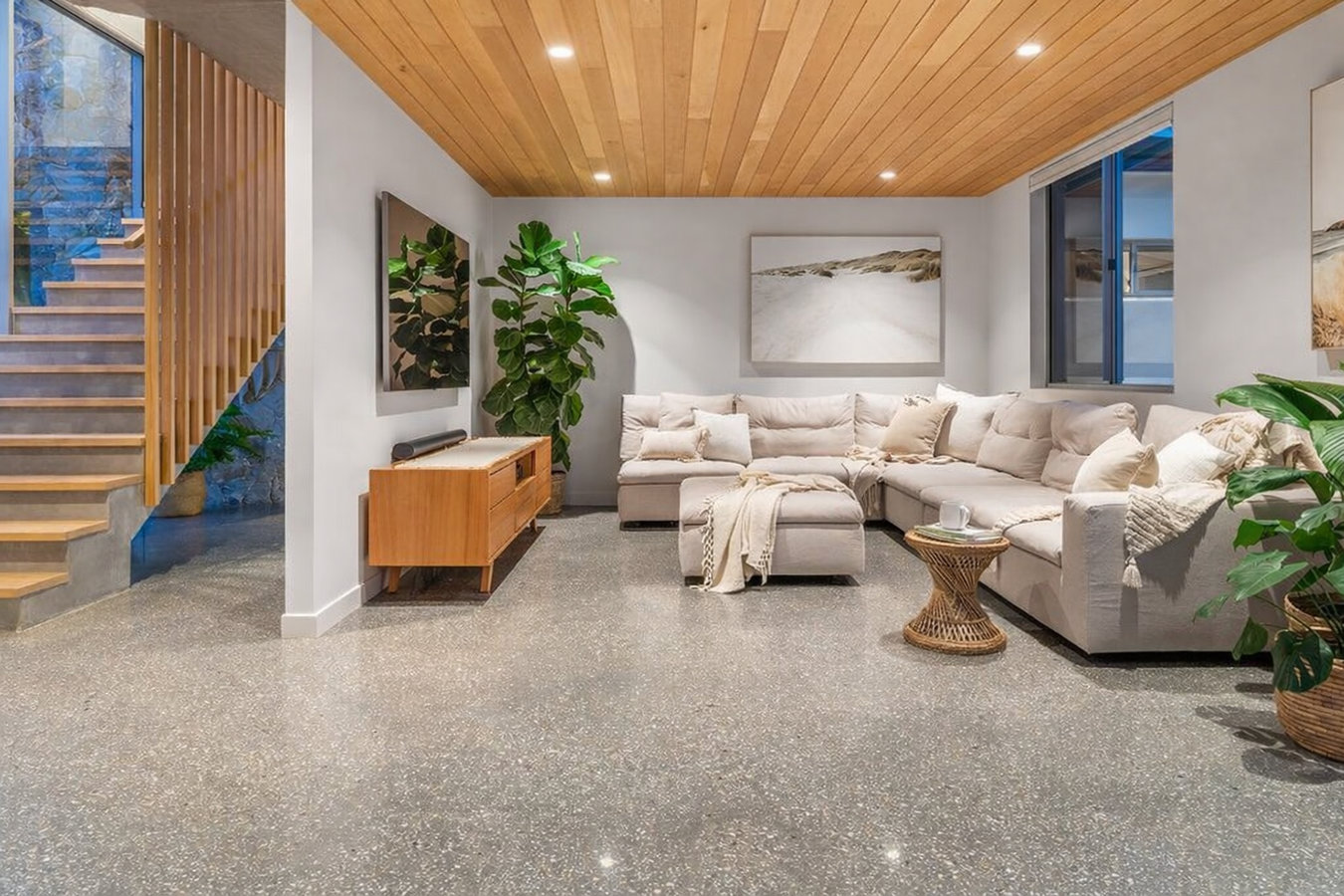
For homeowners who want more than plain gray concrete, we can add integral color to the mix, stamp patterns into the surface while it is still workable, or apply a sealer or coating after curing. If you are finishing a basement and want a decorative surface, our concrete pool decks crew uses the same decorative techniques on outdoor surfaces, so we can help you coordinate the look across your property.
Full installation from base prep to finished slab, sized and reinforced for your specific space and intended use.
Suits homeowners with failing old slabs that need to come out before a proper new floor can go in.
Stamped, colored, or sealed finishes for homeowners converting garages or basements into finished living space.
A large share of Little Rock's housing was built between the 1950s and 1980s, and many of those homes have original concrete floors in garages and basements that were poured thinner and with less base preparation than current standards require. Decades of Arkansas weather - wet springs, hot and dry summers, occasional hard freezes - have put those floors through a lot of stress. Little Rock's expansive clay soil is the main culprit: it swells when the ground absorbs heavy spring rain and contracts during dry summers, and a floor that was not designed for that movement eventually shows it. Getting the base prep right the first time is the difference between a floor that lasts and one that starts cracking again within a few years. The Portland Cement Association and the American Concrete Institute both publish detailed guidance on floor construction standards that inform how we approach every pour.
We serve homeowners throughout the Little Rock metro, including North Little Rock and Conway, where the same clay soil conditions and aging housing stock create identical challenges. Whether you are in an older brick ranch in Broadmoor or a home in West Little Rock built in the 1990s, we have seen the kind of floor your property likely has - and we know what it takes to replace it properly.
We respond within 1 business day and schedule a free on-site visit to look at the space in person. We do not give firm prices over the phone - the condition of the ground underneath and your property's access both affect the final cost.
We look at the existing floor, assess what is underneath, and give you a written estimate that covers demolition if needed, base prep, the pour, and cleanup - with no hidden line items added later.
We apply for the required City of Little Rock building permit before any work begins. Permit processing takes a few business days to a couple of weeks. You get a confirmed start date once the permit is approved.
We prep the base, pour and finish the slab, and coordinate the city inspection. After the curing period - typically 7 days for foot traffic, 28 days for vehicles - we walk through the finished work with you.
Free on-site estimate. Permits handled. No surprises on the bill.
(501) 621-2844Most floor failures in Little Rock start below the slab, not at the surface. We compact the soil, lay a proper gravel base, and use moisture protection as a standard step - not an optional upgrade - because the local ground conditions require it.
Every concrete floor project we complete goes through the City of Little Rock permit and inspection process. That documentation protects you when you sell your home and gives you recourse if anything goes wrong. We handle the paperwork - you do not need to manage it.
We visit your property before quoting. If your old slab needs to come out first, we tell you upfront and include it in the estimate. If it does not need to come out, we tell you that too. We do not discover extra work after you have already signed.
Little Rock summers are hard on fresh concrete, and winter cold snaps can ruin a pour if the timing is wrong. We plan your project around conditions - early mornings in summer, protective measures in cold weather - so the concrete has the best chance to cure properly from day one.
A concrete floor is one of those things where the work you cannot see - the base preparation, the reinforcement, the drainage - determines whether it lasts. We do not skip those steps, because our reputation in this city is built on floors that are still performing years after the pour.
Slip-resistant, properly drained concrete pool decks that hold up through Little Rock's hot summers and wet spring seasons.
Learn MoreGarage-specific concrete floors poured to the right thickness and finished for vehicle traffic and everyday use.
Learn MoreLate spring and fall book up fast - the best seasons for a lasting pour in Little Rock's climate. Call now to get on the schedule.